

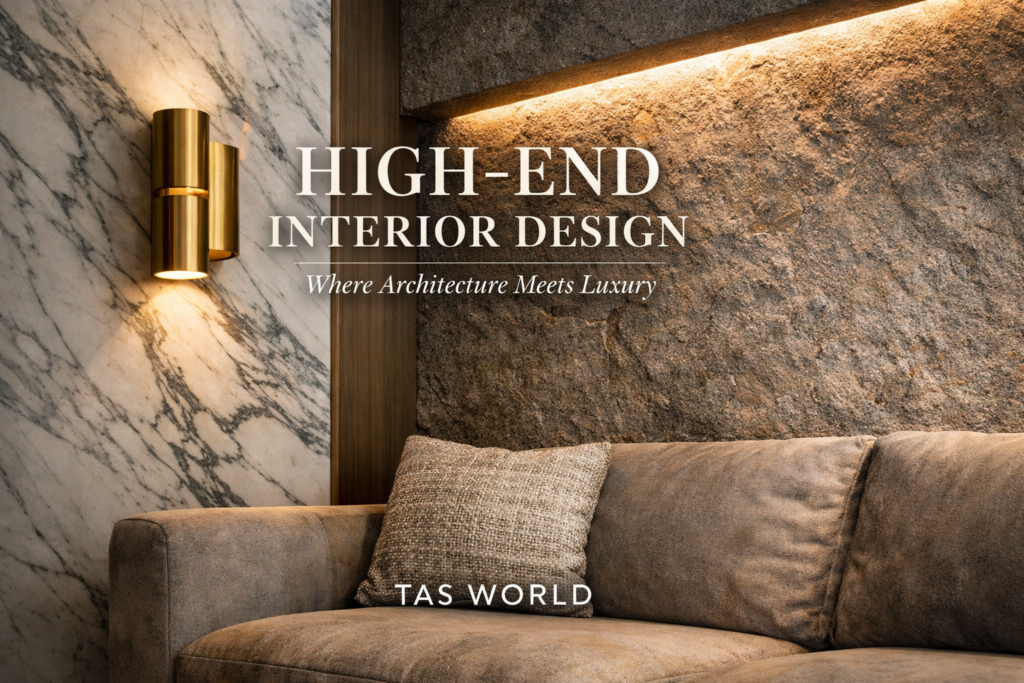
Luxury interiors have evolved far beyond decoration. Today, the most sophisticated homes are defined not by excess, but by precision. Materials, lighting, spatial flow, and architectural harmony now shape the experience of modern living.
Across India’s most refined residences, modern luxury home interiors are designed as an extension of architecture rather than a separate layer of styling. Every element, from the proportion of a living room to the texture of a wall surface, contributes to an atmosphere of quiet elegance.
For homeowners working with luxury architecture firms or searching for the best architect in Delhi, the focus has shifted toward interiors that feel timeless, balanced, and deeply integrated with the structure of the home itself.
Luxury today is not about showing more.
It is about designing better.
Architecture and Interior Design Must Work Together
In truly exceptional homes, architecture and interior design are inseparable. Walls, ceilings, windows, and circulation spaces all influence how interiors feel and function.
Leading luxury interior designers in Delhi increasingly collaborate with architects from the earliest design stages. When interior planning begins alongside luxury residential architecture, spaces become more coherent and intentional.
A double-height living room, for example, cannot simply be decorated after construction. Its proportions, lighting strategy, and furniture scale must be considered during the architectural design itself.
This is why many homeowners prefer working with integrated teams that include both architects and interior designers. When spatial design and luxury interior design services evolve together, the final result feels natural rather than assembled.
In high-end homes, interiors are not an afterthought.
They are part of the architecture.
Material Intelligence Defines True Luxury
One of the defining characteristics of high end home interiors is material selection.
Luxury is rarely about quantity. It is about the quality and authenticity of materials used throughout the home.
Modern luxury interiors often combine:
natural stone surfaces
hand-finished wood panels
brushed metals
textured plaster walls
large-format marble flooring
These materials create depth and character while maintaining visual calm.
In many of the most luxurious house design inside contemporary villas, designers intentionally limit the palette to a few refined materials used consistently across the home.
This restraint produces interiors that feel cohesive rather than overwhelming.
Materials age, patina, and evolve with time.
That evolution is part of what defines lasting luxury.
Lighting as a Design Language
Lighting is one of the most powerful tools in modern luxury home interiors.
Instead of relying on a single light source, high-end homes use layered lighting strategies that combine natural light with architectural illumination.
Examples include:
recessed ceiling lighting
wall washers highlighting textures
indirect cove lighting
statement lighting fixtures
floor lamps creating ambient warmth
Natural daylight remains the most important element. Large windows, courtyards, and skylights allow sunlight to travel deep into interior spaces.
This balance between daylight and artificial lighting transforms interiors throughout the day.
Morning light energizes spaces.
Evening lighting softens the atmosphere.
In carefully designed interiors, lighting does not simply illuminate a room.
It shapes the emotional tone of the home.
Spatial Simplicity Over Visual Excess
One of the biggest misconceptions about luxury interiors is that they must be elaborate.
In reality, the most refined homes often appear deceptively simple.
This philosophy of upscale interior design focuses on clarity and restraint.
Instead of filling every wall with decoration, designers emphasize proportion, texture, and spatial balance.
Furniture is carefully selected rather than accumulated.
Walls are allowed to breathe.
Circulation pathways remain open.
The result is an environment that feels calm, expansive, and intentional.
True luxury is not created through excess ornamentation.
It is achieved through thoughtful restraint.
Furniture and Proportion
Furniture plays a crucial role in shaping the experience of a space.
In high end home interiors, furniture is often custom-designed to match the proportions of the room. Oversized furniture can overwhelm a space, while undersized pieces can make it feel incomplete.
Luxury homes frequently incorporate:
bespoke sofas and seating
custom dining tables
integrated storage systems
architectural shelving
These elements are designed not only for comfort but also to maintain visual harmony within the room.
Circulation is equally important. A well-designed living room allows movement without obstruction while maintaining clear focal points.
Interior designers consider how people will walk, sit, and interact within each space.
Good furniture planning supports both beauty and functionality.
Interior Design and Property Value
Interior design has become an increasingly important factor in real estate value.
In competitive property markets, homes with carefully designed interiors often command stronger interest and higher valuations.
Buyers respond immediately to spaces that feel cohesive and thoughtfully executed.
This is why many homeowners invest in professional luxury interior design services when building or renovating their homes.
Experienced luxury interior designers in Delhi understand how layout, lighting, and materials influence perception.
A home that feels refined and well planned creates a stronger emotional response from buyers.
Good design does not simply improve aesthetics.
It enhances the long-term value of the property.
Interiors as an Extension of Architecture
Ultimately, interiors cannot be separated from the architecture that surrounds them.
Ceiling heights influence furniture scale.
Window placement determines lighting strategy.
Circulation pathways affect spatial flow.
When architects and interior designers collaborate closely, these elements align naturally.
Many leading luxury architecture firms in India now approach projects with this integrated philosophy. Architecture, interior design, landscape design, and lighting all evolve together.
This holistic approach produces homes that feel harmonious rather than fragmented.
Luxury residential design is most successful when every element contributes to a unified vision.